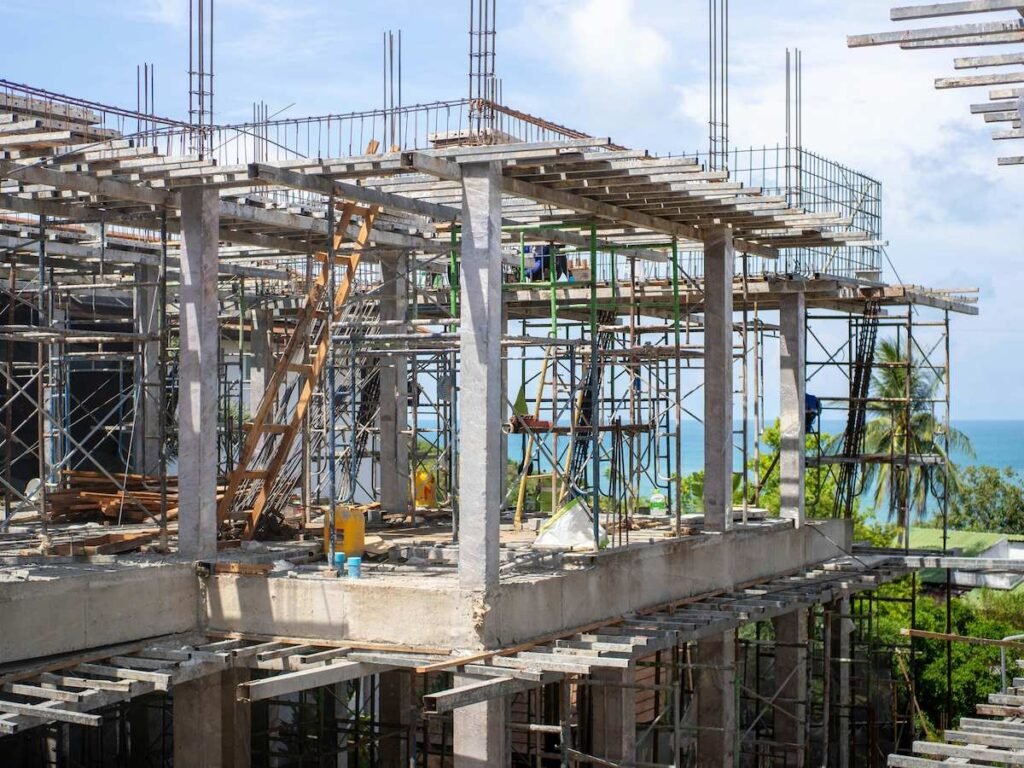
The single most important thing to understand before buying land or a villa in Phuket as a foreigner in 2026 is that the process has a correct order, and that doing it in the wrong order is where almost every foreign-buyer problem on the island begins. The agent’s order is “see the property, fall in love with it, pay a deposit to secure it, then sort out the legal side.” The correct order is the opposite: understand what you can actually own, choose an ownership structure that fits, engage an independent lawyer first, then look at specific properties, then commission a proper architectural site assessment, and only then commit. This article walks through the correct order, in the eight stages that genuinely matter, with the 2026 legal and regulatory context made explicit.
This is written from a working architect’s perspective. It does not replace specific legal advice on a specific transaction, which only a qualified Thai lawyer can give. It is the framework a serious buyer would want to walk through before any signature.
Stage one: understand what you can and cannot own
Foreign nationals cannot own land in Thailand. This is the central legal fact and it does not change. Under the Thai Land Code Act, land ownership is restricted to Thai citizens and Thai-majority Thai-registered legal entities. The very limited exceptions (Board of Investment promotions requiring a minimum 40 million baht investment in qualifying activities) are not practical for residential buyers.
Foreign nationals can, however, hold legal interests in Thai property through several established routes. A condominium unit can be owned outright, in freehold, by a foreign national, provided the building’s foreign-ownership share does not exceed 49 per cent of total saleable area under Section 19 of the Condominium Act B.E. 2522 (1979). A villa or house structure can be owned by a foreigner even where the land beneath cannot; building ownership and land ownership are legally separable in Thai law. Land use rights can be held through a registered long lease of up to 30 years under the Civil and Commercial Code, or through superficies and usufruct rights granted by a Thai landowner. Foreign nationals can also hold shares in Thai companies that own land, provided those companies have a genuine, independently active Thai majority shareholding with real economic activity. The use of nominee Thai shareholders for the sole purpose of holding land for a foreign principal is illegal under Section 36 of the Foreign Business Act B.E. 2542 (1999).
For a buyer at this stage, the practical implication is to be honest about which route fits the actual project. A foreigner wanting outright ownership of a unit and full secure title has one route: a condominium unit within a building’s foreign quota. A foreigner wanting a villa with a garden, a pool, and the look and feel of an owned house has two genuine routes: ownership of the villa structure with a registered long lease over the land, or ownership of the villa structure with superficies rights over the land. The third route, a Thai company holding the land, was historically tolerated but is now under materially tighter enforcement following the Department of Business Development’s Order 2/2568 of December 2025 (effective 1 January 2026) and Order 1/2569 of March 2026, and its AI-screened review of around 46,000 mixed-ownership companies. For most foreign buyers in 2026 a company route should not be the starting position.
Stage two: research the area before any specific plot
Most foreign buyers underestimate how much the area-level decision matters relative to the specific-plot decision, and how much risk is loaded onto the wrong area-level choice. The same money buys completely different things in completely different conditions across Phuket. A flat coastal plot in Mai Khao sits inside Sirinat National Park where private building is prohibited or severely restricted. A premium hillside plot in Surin sits on the most strictly enforced shoreline on the island with documented demolitions in 2016 and again in 2025. A heritage shophouse on Thalang Road in Talad Yai is conserved fabric where any work is governed by conservation controls. A “cheap and flat” plot in Mai Khao is exactly the plot most likely to be inside protected land that cannot be built on.
This is the stage at which to read seriously about the area. The subdistrict guides on this site cover every official Phuket tambon plus the major sub-areas (Nai Harn, Kata, Bang Tao, Layan, Cape Yamu) in depth, with the same framework: what each area actually is, what the rules really mean there, and what a sensible building on that land might look like. The objective of this stage is to narrow the search to two or three areas that genuinely fit the brief, before viewing any specific property in any of them. Choosing the wrong area is the most expensive correction in the whole process, because the property visit and the falling-in-love that follows are very hard to walk back.
Stage three: engage an independent Thai lawyer before viewing properties
The single highest-leverage thing a foreign buyer can do, in financial and risk terms, is to engage an independent Thai property lawyer before viewing any specific property. This is not standard agent advice and it is not in the agent’s interest, which is precisely why it matters.
The lawyer must be independent of the seller, the agent, and the developer. A lawyer recommended by your agent is not your lawyer. Their loyalty must be solely to the buyer, and they should be specifically experienced in Phuket property and in foreign-ownership structures. Legal fees for due diligence on a residential purchase typically run in the order of 20,000 to 60,000 baht, depending on complexity. This is the lowest-cost, highest-protection line in the whole project budget, and any buyer reluctant to commit it before they look at properties is in a weaker negotiating position than they realise.
At this stage the lawyer is briefed on the buyer’s situation, the intended use, and the ownership-structure routes that fit. The lawyer is then on standby to conduct due diligence on the specific property once one is identified, which is the next critical stage.
Stage four: identify candidate properties and walk away from the wrong ones
This is the stage at which most buyers want to start, and at which the previous three stages do most of their work in the background. With the area narrowed, the ownership-structure route understood, and the lawyer engaged, candidate properties can be viewed without commitment.
The agent representing the property works for the seller, not for the buyer, even where their tone is friendly. Reservation deposits requested by agents to “hold” a property typically range from 50,000 to 200,000 baht and some of these deposits are explicitly non-refundable. If due diligence subsequently reveals a problem (a mortgage on the title, an existing encumbrance, a building-permit violation, a full foreign quota in a condominium, an estate covenant the buyer did not expect, an actual relationship to a protected area or a contested-land history), a non-refundable deposit means the buyer has just paid to discover a deal-breaking problem. Either negotiate a fully refundable reservation fee in writing, or do not pay any reservation deposit until due diligence is complete. A seller serious about the transaction will accept this; one that will not is signalling that the property may not survive scrutiny.
At this stage a preliminary architectural land viability check is also useful, even before formal commitment, to establish that the plot in question can actually accommodate what the buyer wants to build. The “An architect’s introduction” article on this site and the cost-to-build article cover what a feasibility assessment should establish.
Stage five: conduct full due diligence with the lawyer
Once a property is identified and a fully refundable hold (or no hold) is in place, due diligence begins. The lawyer manages this stage; the buyer’s job is to make sure it is genuinely thorough.
For any land or villa transaction, the diligence must include a title-deed verification, ideally a Chanote (Nor Sor 4 Jor), the gold-standard title with surveyed boundaries, full ownership rights, and registration at the provincial Land Office. Less secure title types (Nor Sor 3 Gor, Nor Sor 3, Sor Kor 1, possessory) are not generally appropriate for foreign-buyer transactions and should be approached with extreme caution if at all. The lawyer verifies at the Land Office that the seller is the registered owner, identifies any encumbrances (mortgages, rights of way, easements, existing leases), and reviews the title’s history, particularly for any indication of past dispute, indigenous-community claim, or relationship to protected land. In areas with documented title-history issues (notably parts of Rawai with the Urak Lawoi community land-rights situation, and any plot near Sirinat National Park or the Khao Phra Thaeo reserve), this historical check is essential rather than optional.
For a condominium transaction, the lawyer must additionally obtain written confirmation from the condominium’s juristic person (management office) that the foreign quota for the building is not full and that the specific unit can be acquired under foreign freehold ownership. In popular Phuket developments, the foreign quota commonly sells out, and an agent’s verbal assurance that a “foreign-quota unit is available” in a sold-out building is a red flag. Only written juristic-person confirmation is acceptable here.
For a leasehold transaction, the lawyer must review the lease terms, the renewal mechanism, the underlying landowner’s identity, and the specific drafting of the lease against the Civil and Commercial Code’s 30-year statutory cap. The Thai Supreme Court ruling 4655/2566, issued in March 2025 in a Phuket case, voided a 30+30+30 lease structure on the grounds that the Civil Code caps a single lease at 30 years and that pre-agreed extensions are not enforceable against successor landowners. A lease structured as 30+30+30 with binding renewal language is, on the strength of that ruling, a structure a buyer should not rely on. Leases drafted to the statutory 30-year maximum with a renewal mechanism that is not pre-agreed and that allows for genuine future negotiation are the correct contemporary structure.
For any company-route transaction, the diligence and the structure must satisfy the tightened 2026 enforcement environment, including the Thai shareholders’ demonstrated pre-payment of share capital under DBD Order 2/2568, the Written Confirmation of Investment under DBD Order 1/2569, and genuine independent economic activity by the Thai shareholders. The legal series on this site covers this in detail. For most residential buyers in 2026, the lawyer’s honest advice will be that a condominium freehold or a properly drafted single 30-year lease is a sounder route than a company structure.
Stage six: contract negotiation and the Sale and Purchase Agreement
With due diligence clean, contract negotiation begins. This is the lawyer’s stage and the contract must be the buyer’s lawyer’s draft or substantially reworked draft, not the seller’s or the developer’s template. Developer templates in particular are written to protect the developer, not the buyer; clauses commonly found in them include delay-completion provisions favouring the developer, deposit-forfeiture clauses on the buyer’s side, and specification-substitution language that allows the developer to change what is delivered.
For a leasehold transaction, the lease document and any associated villa sale-and-purchase agreement for the structure must be carefully reviewed. The lessee’s ownership of the building is registered separately at the Land Office through the building sale-and-purchase or building construction contract route. For a condominium transaction, the sale-and-purchase agreement, the condominium juristic-person rules, and the foreign-quota allocation paperwork are reviewed together. For any new-build off-plan condominium, the developer’s licence, project licence (under the Land Allocation Act where applicable), construction permits, and Environmental Impact Assessment (where applicable for projects exceeding around 80 units or 4,000 square metres of total floor area) must be verified.
Reasonable deposit levels at contract signature, after refundable reservation, typically run 10 to 25 per cent of the purchase price for off-plan, less for completed property, with the balance due at title transfer.
Stage seven: fund transfer and registration at the Land Office
Funds for a foreign-freehold condominium purchase must be transferred to Thailand from overseas in foreign currency. The receiving Thai bank issues a Foreign Exchange Transaction Certificate (FETF, previously called a Tor Tor 3) confirming the foreign-currency inflow. Without this document, the Land Department will not register foreign freehold ownership of a condominium unit. The transferred amount must match or exceed the purchase price. This requirement does not apply in the same form to leasehold purchases, but proper documentation of the source and route of funds is still required.
Title registration takes place at the relevant provincial Land Office, with both parties (or their authorised representatives, through registered Power of Attorney) present. The transfer fee (2 per cent of the registered value), the specific business tax or stamp duty as applicable, withholding tax on the seller’s gain, and any local taxes are typically split or apportioned by agreement, with the splits set out in the sale-and-purchase agreement. For a condominium freehold, the foreign buyer’s name is entered on the unit title deed at this stage. For a leasehold, the lease is registered against the land title. For a villa structure separate from the land, the building sale or construction contract and the building permit (in the buyer’s or lessee’s name) provide the evidentiary record of the buyer’s ownership of the structure.
This is the stage at which the transaction becomes legally binding and the buyer has secure title or registered lease. Until registration is complete, due diligence findings can still trigger withdrawal in most properly drafted contracts.
Stage eight: from acquisition to build, the architect’s stage
For a buyer who has acquired land or land use rights with the intention to build, registration is not the end of the process but the beginning of the project. The next stages, covered fully in the “Cost to build a villa in Phuket” article and the “How the process works” page on this site, are concept design, full construction drawings, permits and approvals (through the relevant Tessaban or Or Bor Tor), costing and tender, and supervised construction. The preliminary land viability assessment that a buyer commissioned at stage four or five becomes the starting point for the full architectural brief.
For a buyer who has acquired a completed condominium or finished villa, no architectural build stage follows immediately, but the same practice is available for renovation, adaptive reuse, or interior architectural work where required, particularly on heritage shophouses in Phuket Town where conservation controls apply.
What to take away from this article
The process for a foreign buyer in Phuket in 2026 is well-established, legally clear, and entirely manageable when followed in the correct order. The legal pathways exist and are stable. The regulatory enforcement around foreign-ownership structures has tightened but not closed the routes that were legitimate to begin with. The diligence requirements are clear and the professional support is available. The mistakes that buyers make, almost without exception, come from skipping or reversing stages, in particular from looking at properties before engaging a lawyer, paying reservation deposits before due diligence, or relying on the seller’s or agent’s representations rather than independent verification.
The buyer who follows the eight stages above in order, with an independent lawyer engaged early and an architect involved before any irrevocable land commitment, is the buyer whose transaction completes cleanly and whose subsequent build performs as intended. The buyer who does it in the agent’s order is the buyer whose problems start at stage five and compound from there.
If you are at the stage of researching, the area-specific guides and the legal series on this site cover each step in greater depth. If you are at the stage of considering a specific property, the most useful next step is a preliminary land viability assessment, offered as the first stage of every project this practice takes on, and an independent Thai property lawyer engaged in parallel.
Considering buying land or a villa in Phuket? Get in touch for a preliminary land viability assessment to run alongside your legal due diligence, or read the area-specific and legal guides on this site for the next level of detail. You can also visit our YouTube channel for videos about these areas and find essential planning advice at www.thetropicalarchitect.com
Note on regulations: foreign-ownership, title, lease, condominium, fund-transfer, and tax rules are subject to change and to specific interpretation in individual transactions. The 2026 enforcement environment for company structures is materially tighter than it has been historically. Always confirm current rules and the specifics of any transaction with the Land Office, the relevant Tessaban or Or Bor Tor, a qualified Thai property lawyer independent of the seller and agent, and a licensed Phuket architect before relying on this guide for any acquisition decision.