A wide-angle 2026 view of Phuket: what the island actually is, where it sits among the southern Thai islands, where the market really stands after the 2025-2026 enforcement shifts, and whether it is the right place for a foreign buyer to commit to right now.
If you are considering buying or building in Phuket in 2026, almost everything you read online about the island misses what the place actually is. The travel guides describe beaches. The property portals describe yields. The lifestyle magazines describe lattes in Phuket Town. None of that is wrong, but none of it answers the question a serious foreign buyer is really asking, which is: what kind of place am I committing my money to, how did it become what it is, where does it sit relative to the alternatives, and is now the right moment. This article is the wide-angle view that sits behind every other piece on this site. It is written from an architect’s perspective rather than a sales perspective, with the verified facts and the honest comparison made explicit.
What Phuket actually is, in one paragraph
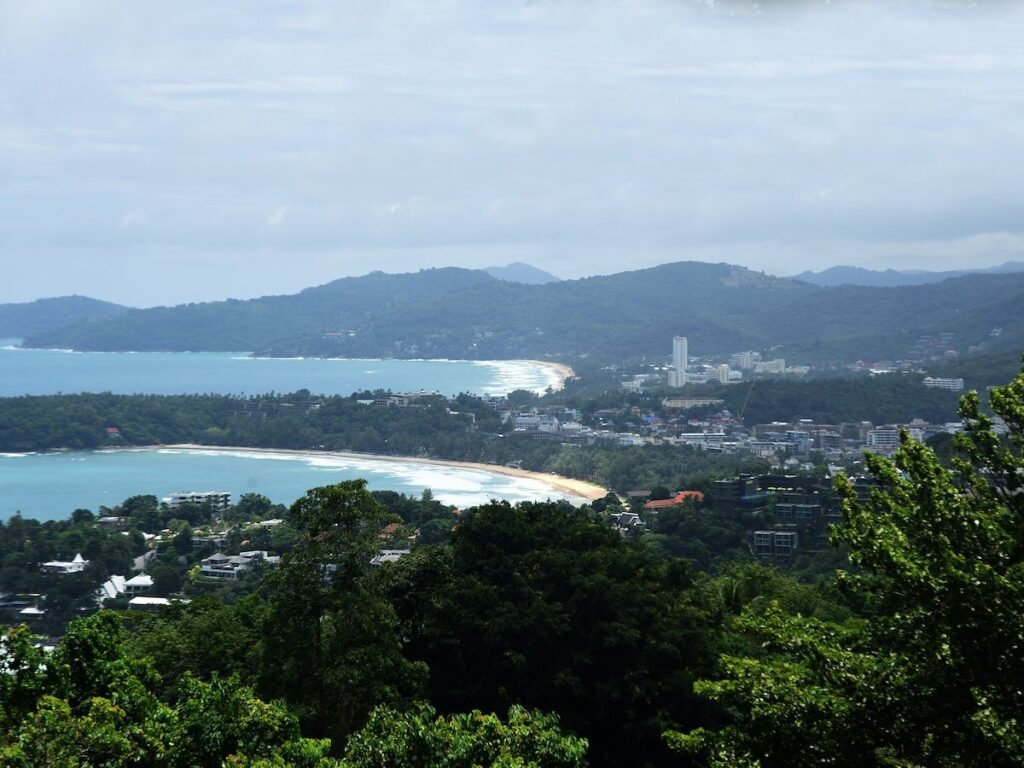
Phuket is the largest island in Thailand, set in the Andaman Sea off the southwest peninsular coast, with a surface area of around 540 square kilometres and a maximum elevation of about 520 metres. It is linked to the Thai mainland by the Sarasin Bridge, opened in 1967, which is the practical reason the island’s property market and infrastructure are decades ahead of any other Thai island. Its permanent population is in the order of 460,000 people across three districts and 17 official subdistricts, with roughly 60,000 Russians and a far larger long-term expatriate population beyond that. It receives over ten million international visitors a year. Around 70 per cent of the local population is of southern Chinese, predominantly Hokkien, descent, the legacy of the nineteenth-century tin-mining migration that built modern Phuket and gave the island its distinctive Baba Peranakan culture, its UNESCO Creative City of Gastronomy designation, and the Sino-Portuguese architectural fabric of Phuket Town. The island is geologically a granite spine of forested hills rising from a coastal plain, with the Andaman beaches on the west, Phang Nga Bay’s karst seascape on the east, and a working economy that mixes tourism, marine industry, retirement and remote-work residence, and an increasingly significant real-estate market.
The history that explains the present
Most foreign buyers approach Phuket as a tourist destination with a few centuries of light history attached. The truth is the reverse. Phuket has been on established maritime trade routes since at least the first century BCE, and was a known and contested location through the Ayutthaya kingdom from around the sixteenth century. It was a battleground in the Burmese-Siamese wars, with Burmese forces destroying the island’s settlements in 1810, an event so thorough that very little pre-1810 documentary history survives. What followed reshaped the island. Hokkien Chinese tin miners arrived from Penang and Fujian through the nineteenth century, drawn by some of the richest alluvial tin deposits in the region. By the late 1800s the tin economy had built a town of Sino-Portuguese shophouses, mansions, and clan associations, with a population of Thai-Chinese Peranakan families who married Thai women, kept the Hokkien temples and language alive, and developed the food culture that earned the island its UNESCO designation in 2015.
The tin economy peaked in the early twentieth century and then declined; by the 1970s the mines were closing and large tracts of the island were degraded ground. Bang Tao on the west coast was abandoned mining land considered worthless. It was in this period that Phuket pivoted, slowly at first, to tourism. The first beach bungalows opened at Patong in the early 1970s. Laguna acquired 222 hectares of degraded Bang Tao mining land in 1984 and ran the soil remediation programme that turned the mining pits into the lagoons. The international airport opened, Phuket gained direct flights from Europe, Asia, and Australia, and the island’s modern real-estate market began with the completion of the first major resort condominium, Allamanda at Laguna, in 1993. Each subsequent decade added a layer: the 1990s the establishment of Patong as a tourism centre, the 2000s the rise of the upscale west-coast villa market and the 2004 Indian Ocean tsunami that struck Patong, Kamala, Karon, Kata, and the southern coast and shaped how the island has built ever since, the 2010s the maturation of Bang Tao, Surin, and Layan as premium addresses, and the 2020s the post-pandemic surge driven by Russian arrivals after 2022, the Chinese return, and a step-change in the foreign-resident base.
This history matters for a buyer because it explains why Phuket does not look or feel like the other Thai islands. The Sino-Portuguese conservation zone in Phuket Town is the kind of heritage you cannot manufacture. The remediated former mine land at Bang Tao is the technical foundation of the island’s most expensive coastal development. The 2004 events are why every architect building on the west coast thinks carefully about finished floor levels and routes to higher ground. The Sarasin Bridge is the reason the island has infrastructure no other Thai island has. Phuket is not a virgin beach destination with new resorts; it is a 200-year-old commercial island, with the layers and the contradictions that implies.
The geography and the geology
Phuket is dominated by a north-south granite spine of forested hills running through the centre of the island, with the highest point at Mai Tha Sip Song peak in the Khao Phra Thaeo non-hunting area, roughly 520 metres. The west coast is the famous Andaman face: long sandy beaches separated by rocky headlands, from Mai Kha and the protected Sirinat National Park in the north, down through Bang Tao, Surin, Kamala, Patong, Karon, Kata, and Nai Harn at the southern tip. The east coast is calmer, with mangrove and channel shoreline, marina developments at Ko Kaeo, the working harbour at Ratsada, and the karst-island seascape of Phang Nga Bay backed by the ultra-luxury Cape Yamu peninsula. The interior is a mix of forested hills, the central tambon of Kathu, the historic capital of Thalang and its old temples, and the protected rainforest of Khao Phra Thaeo. Phuket Town sits in the southeast, an inland-and-bay administrative centre rather than a beach town, with the airport at the northern end of the island linked to the south by Route 402, the Thepkrasattri Road, the central arterial that carries every airport journey.
The geological story matters because it shapes what is buildable where. Bang Tao sits on reclaimed mine land with engineered ground conditions. The west coast hillsides are aggressive granite slopes that have produced fatal landslides where construction outran the engineering. The northern coast carries protected mangrove and national-park status. The east coast has soft channel and mangrove ground that demands proper geotechnical investigation. The Nakkerd Range above Chalong, on which the Big Buddha sits, is protected hill land where the December 2024 elevation relaxation does not apply. These are not abstract distinctions. They are the difference between a successful build and an expensive correction.
The people
The permanent population of Phuket is around 460,000, with the metropolitan area continuing to grow at roughly 1.3 per cent annually. Around 70 per cent are of southern Chinese, predominantly Hokkien, descent from the tin-mining era, with the Baba Peranakan community defining much of the island’s distinctive culture, cuisine, and Phuket Town architecture. Muslim Thai communities, including the Urak Lawoi indigenous Chao Lay community around Rawai whose land-rights situation is covered in detail in the area guide, make up the remainder of the long-established population.
The foreign-resident population is large and demographically distinct. Estimates put around 60,000 Russians living on the island, the largest single foreign nationality, with significant communities of British, Australian, German, French, Scandinavian, American, Chinese, Korean, Indian, and other expatriate residents. The post-2022 Russian arrival, driven by the war in Ukraine, more than doubled the Russian visitor count in the first months of 2023 and converted to a substantial property-buying cohort that reshaped the west-coast market, particularly around Bang Tao, Rawai, and Patong. The Chinese return after the pandemic added a second wave. The long-term British and Australian expatriate base has been stable. The retirement, remote-work, and family-relocation pools are growing.
This matters for a buyer because Phuket’s market is not a single market. The Russian segment, the Chinese segment, the European retirement segment, the family-with-international-school segment, and the marine-and-yacht segment all behave differently, want different things, and respond to different infrastructure. The rental yield numbers and the resale liquidity for a property depend significantly on which of these segments it is appropriate for. A Cape Yamu villa, a Bang Tao branded residence, a Rawai compound, a Talad Yai heritage restoration, and a Boat Lagoon condominium are different products in different sub-markets.
Where the property market actually stands in 2026
The most useful single fact about the 2026 Phuket property market is that it has finished its post-pandemic recovery and is now in a mature, multi-segment growth phase. KKP Bank is forecasting 8 to 10 per cent annual price growth through 2026, making Phuket the strongest-performing resort property market in Thailand by that measure. CBRE Thailand data shows average new premium condo prices exceeded 180,000 baht per square metre in the Bang Tao-Laguna corridor in 2025, with condo prices having climbed 8 to 12 per cent annually between 2023 and 2025. Rental yields run 5 to 9 per cent in well-managed condominium and villa pools, with branded residences at the top end.
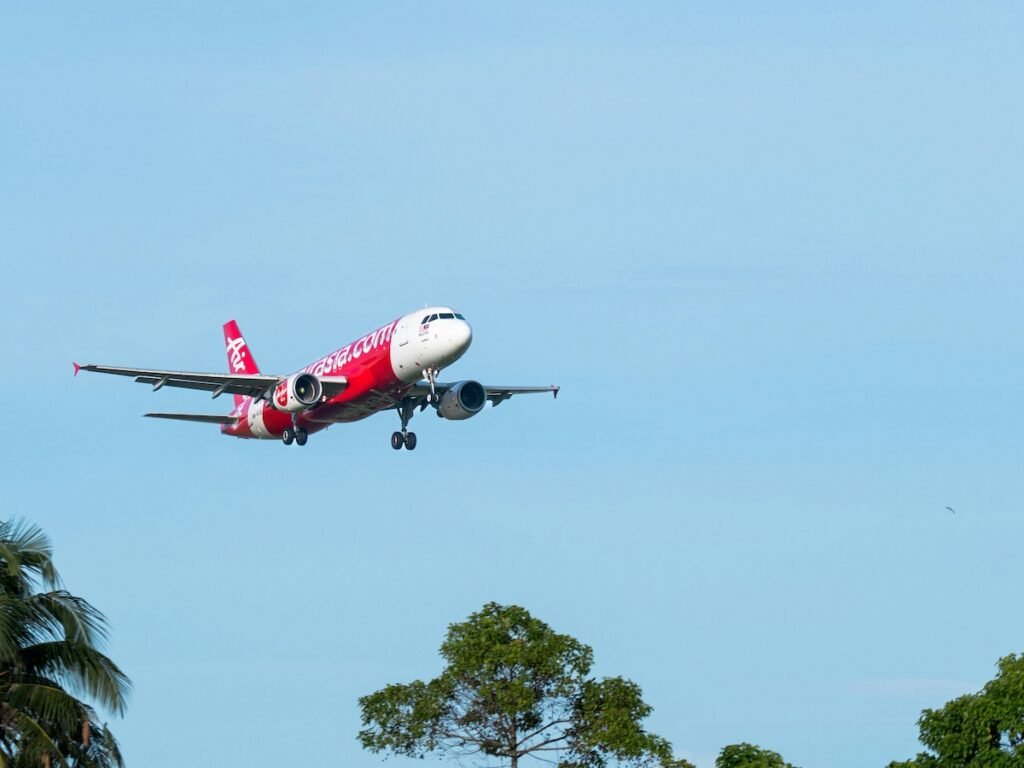
Phuket received 10.1 million international visitors in 2024 and is tracking toward 11 million-plus in 2026. The island’s international airport handled 19.7 million passengers in 2024, near capacity, and a planned new southern airport targeting 12.5 million passengers annually is in development. The Kathu-Patong expressway and a planned Phuket light rail system are reducing journey times between the airport and the main tourism corridors. The Tourism Authority of Thailand targets 36.7 million foreign arrivals nationally in 2026, with Phuket expected to capture the lion’s share of luxury tourism demand.
The market drivers behind the price growth are real rather than speculative. The west coast premium land is genuinely running out, with buildable Bang Tao, Layan, and Surin plots increasingly scarce, and major branded-residence developments (Banyan Tree, Anantara, COMO, Banyan Group, MontAzure, The Cape Estate) competing for the remaining inventory. International school capacity, hospital infrastructure (Bangkok Hospital Phuket, Phuket International Hospital, Mission Hospital), and the retail and lifestyle hubs at Boat Avenue, Porto de Phuket, and Central Festival anchor the long-stay and retirement market. The infrastructure pipeline supports the next five-to-ten-year price trajectory.
At the ultra-luxury end, Cape Yamu has seen 12 to 18 per cent year-on-year appreciation in recent years, with foreign buyers accounting for over 60 per cent of transactions. The Bang Tao corridor has reached pricing comparisons with Bangkok’s Sukhumvit. Ultra-luxury waterfront villas in Cape Yamu and Bang Tao occasionally reach 15 to 20 million USD. Branded residence pricing per square metre in the most desirable areas is in the 8,000 to 12,000 USD range. This is no longer a frontier-priced market.
The Russian dynamic and how it is changing
A foreign buyer reading Phuket coverage from 2022 to 2024 will have seen the island described, sometimes critically, as a Russian-dominated market. The reality in 2026 is more nuanced. Russian arrivals more than doubled in 2023 and the Russian resident population around 60,000 is the largest single foreign nationality. Real estate agents reported Russians as the number-one foreign buyers on the island for a period, with the Bang Tao corridor particularly affected. This drove sharp price appreciation, the proliferation of Russian-targeted services, and tensions around illegal short-term rentals and over-concentration in certain areas.
The Thai authorities responded with three significant moves. First, Operation Nominee Sweep in 2024 arrested 231 people including 98 foreigners, mostly Russians, seizing 1.5 billion baht in assets and 245 land documents in nominee-linked transactions. Second, the Tourism Authority and provincial government tightened enforcement against illegal short-term villa and condo rentals. Third, and most consequentially for any 2026 buyer, the Department of Business Development’s regulatory programme through 2025 and 2026, covered in detail in the legal series on this site, has effectively closed the nominee-company route for foreign land holding. The 2026 enforcement environment uses an Intelligence Business Analytic System (IBAS) AI screening of around 46,000 flagged companies, with over 850 prosecutions and an estimated 15.1 billion baht in damages identified. Industry lawyers describe the nominee model as effectively dead in 2026.
The practical effect on the market is twofold. The Russian-buyer share has stabilised and is no longer the runaway driver it was in 2023, with the buyer base diversifying back toward a broader European, British, Australian, North American, and Chinese mix. The structural shift to legally clean ownership routes (condominium freehold within the foreign quota, properly drafted 30-year leases, superficies and usufruct rights) is real, and it makes the post-2026 market structurally sounder, more transparent, and more aligned with the kinds of buyers Phuket needs for its long-term institutional positioning. A buyer entering the market in 2026 does so in a tighter, better-regulated, slightly less wild-west environment than 2023, which is broadly good news.
How Phuket compares to Samui and Phangan
A foreign buyer considering the southern Thai islands typically narrows the choice to Phuket, Koh Samui, and Koh Phangan. Each is genuinely different, and the honest comparison is worth making.
Phuket is the most mature, most internationally connected, and most institutionally developed of the three. It has 10 million-plus visitors a year against Samui’s roughly 1.5 to 2 million. Its international airport is a full intercontinental hub with direct services from Europe, the Middle East, Australia, and across Asia. Samui’s airport is a Bangkok Airways concession with smaller aircraft, limited international routing, and most international visitors connecting through Bangkok. The Sarasin Bridge gives Phuket land access to the mainland; Samui is ferry-served. Phuket has around 16 international schools to Samui’s 6, multiple major hospitals to Samui’s smaller scale, established luxury retail and lifestyle infrastructure that Samui is building toward. Phuket’s freehold condominium market for foreign buyers is the most extensive on any Thai island; Samui has historically had almost no freehold condominium product available to foreigners and is largely a leasehold market. Phuket’s rental yields run 7 to 9 per cent at the top end of well-managed product; Samui’s run 5 to 7 per cent at comparable level. Phuket’s villa entry pricing is meaningfully higher than Samui’s, with Samui typically 20 to 30 per cent cheaper for comparable beachfront product.
Samui’s strengths are the corollary: lower entry prices, a more contained and intimate island character, less density, and a buyer base that often prioritises personal use over rental return. Samui’s market has been developing more slowly because the connectivity has been more limited, but the planned 25-kilometre bridge to the mainland (targeted to open in 2033) and the new cruise terminal (2032) point to a step-change in the medium term that could compress some of the current Phuket-Samui price gap.
Koh Phangan is a different proposition again, smaller, less developed, and historically priced well below Samui. It is now the focus of significant 2026 enforcement attention: the Prime Minister visited the island in May 2026 alongside a 300-officer raid on nominee-linked firms, with reports that 68 per cent of Phangan companies have foreign-ownership links and the crackdown moving from Phangan to Phuket. Phangan suits a buyer at the early-stage end of the southern islands spectrum, comfortable with developing infrastructure, with a strong wellness and lifestyle pull and a different rental-economy model from Phuket. It is not the right comparator for most Phuket-considering buyers.
The honest summary: Phuket offers maturity, infrastructure, liquidity, and the deepest international resale market, at the highest entry price. Samui offers value, character, and a less commodified setting, with a longer infrastructure runway. Phangan offers early-stage value at greater regulatory and infrastructure risk. For a foreign buyer prioritising security, liquidity, family lifestyle, and rental performance, Phuket is the structural answer. For a foreign buyer prioritising value, intimacy, and personal use over yield, Samui has a strong case. For a foreign buyer with a longer time horizon and a higher risk tolerance, Phangan can fit. Many serious investors hold property on both Phuket and Samui for exactly these complementary reasons.
Is now the right time to buy or build in Phuket?
This is the question every foreign buyer eventually asks, and the honest answer in 2026 is qualified rather than absolute. The arguments for buying or building now are strong. The post-pandemic recovery is complete and the market is in a documented growth phase rather than a speculative bubble, with the price drivers (international connectivity, infrastructure investment, branded-residence quality, supply scarcity in the premium corridors) sustainable rather than transient. The legal environment, after the 2025-2026 enforcement programme, is clearer and more secure than it has been for a decade; the routes that survived the crackdown (condominium freehold, properly drafted 30-year leases, superficies and usufruct) are now the only routes, and that simplifies the buyer’s decision rather than complicating it. The architectural and design quality available has matured significantly, with signature international and local practices working at every price level. Currency has been favourable for many foreign buyers. The infrastructure pipeline points to continued price support over the next five to ten years.
The arguments for waiting are weaker but not zero. The premium west coast has priced up meaningfully and entry-level pricing in Bang Tao, Layan, Surin, and Cape Yamu is no longer accessible for buyers seeking value. The continuing enforcement environment around nominee structures means buyers exiting those structures may add to supply in specific pockets. Currency moves against the baht in any specific buyer’s home currency can shift the equation. The general principle that no Phuket property is a good buy at the wrong price holds, and the discipline of working with an independent lawyer and an independent architect, set out in the buying step-by-step on this site, is now more important rather than less.
From an architect’s perspective, the question of whether to buy or build now is less interesting than the question of whether the specific plot, in the specific area, with the specific budget and brief, is right for the specific buyer. That is what a land viability assessment establishes, and it is the right answer for any serious buyer at this moment, regardless of where the market is in cycle terms. A good plot, properly assessed, in the right area for the buyer’s life and project, designed and built properly, is the same proposition in 2026 as it was in 2016 and as it will be in 2036. The macro market matters; the specific decision matters more.
For a buyer who knows what they want, has the budget for the area they want, and is prepared to do the diligence and engage the right professionals, Phuket in 2026 is one of the strongest places in Southeast Asia to commit. For a buyer who is uncertain about the area, the structure, the budget, or the brief, the right answer is to read the area guides, the legal series, and the cost-to-build piece on this site, narrow the position properly, and then commission a preliminary land viability assessment before committing capital to anything specific.
Where to go from here
If you are at the stage of considering the southern islands generally, this article should have given you the wide-angle Phuket position. If you are narrowing to specific areas, the 24 area guides on this site cover every Phuket tambon and major sub-area in depth. If you are thinking about ownership structure, the legal series covers nominee structures, the 30+30+30 lease ruling, superficies and usufruct, and the Foreign Business Act enforcement in 2026. If you are thinking about budget, the cost-to-build pillar piece sets out defensible 2026 ranges. If you are considering a specific plot, the most useful next step is a preliminary land viability assessment.
This site is built around the premise that a foreign buyer in Phuket benefits most from an architect’s professional view at the front end of a project rather than at the back. The 2026 Phuket market rewards exactly that approach.
Considering land or a build in Phuket? Get in touch for a preliminary land viability assessment, or read the area-specific and legal guides on this site for the next level of detail. You can also visit our YouTube channel for videos about these areas and find essential planning advice at www.thetropicalarchitect.com
Note on regulations and market data: all 2026 figures, regulatory positions, and market data in this article are drawn from current published sources and are subject to change. Zoning, height, coastal setback, slope, protected-area, foreign-ownership, and title rules are subject to change and to local enforcement variations. Market forecasts are not guarantees. Always confirm current rules and the specifics of any plot or transaction with the relevant Tessaban or Or Bor Tor, the Phuket provincial Department of Public Works and Town and Country Planning office, the Land Office, and a licensed Phuket architect and qualified Thai lawyer before relying on this guide for any decision