An architect's guide to land viability, coastal resilience, and what Phuket's west-central bay asks of a design.
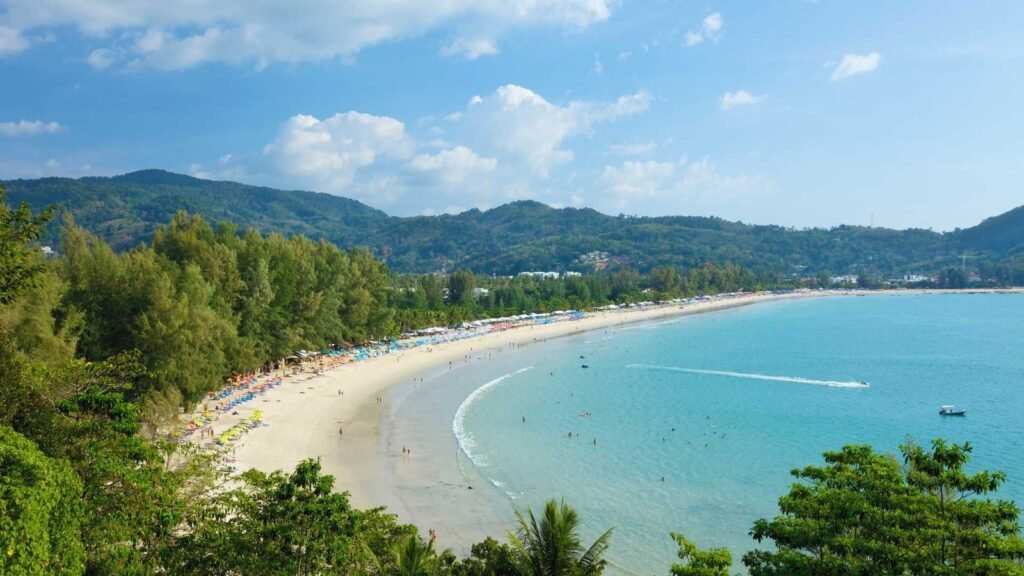
Kamala is one of the most balanced places to live on Phuket’s west coast, a calm bay between the intensity of Patong to the south and the exclusivity of Surin to the north, favoured by families, longer-stay residents, and retirees who want the coast without the frenzy. It is also a place with a serious history that any honest architect’s guide must address directly rather than skirt. Kamala was the worst affected area in Phuket province in the 2004 Indian Ocean tsunami, with the most significant loss of life on the island. This is not a reason to avoid Kamala, which is today a settled and desirable area with a quiet memorial to those events, but it is the single most important context for how a building near this coast should be designed and sited.
For someone considering building here, Kamala offers genuine value and a relaxed coastal life, alongside two specific considerations the casual descriptions omit: coastal resilience as a real design input rather than an afterthought, and the presence of large master-planned estate land on the headland that is a different proposition from open-market plots. The honest story of Kamala is that it is an excellent place to build well, where building well includes taking the coast seriously.
This guide is written from an architect’s perspective. It assumes you are at the stage of asking whether Kamala is right for your project, and what a sensible building on land here might look like.
An important update for Kamala landowners
The defining context for Kamala is coastal resilience and the structure of the land, not a single regulatory change.
The points worth knowing for Kamala specifically:
Kamala was the hardest-hit part of Phuket in the 2004 tsunami, a documented fact that makes coastal siting, finished floor levels, escape routes, and the relationship of a building to higher ground a genuine design consideration on low coastal plots
The hillsides behind Kamala include large master-planned estate land, notably the substantial MontAzure development on the headland toward Millionaire’s Mile, which carries estate covenants and structures distinct from open-market plots
The coastal setback and the rule that beaches are public apply as they do across the island, on a bay where the low coastal strip is limited and the desirable land rises behind it
The hillside that delivers the sea views is steep enough to trigger slope and elevation constraints, so the view land and the constrained land substantially coincide
The headline December 2024 elevation relaxation is relevant on the inland rises but secondary to the central point: at Kamala, the relationship between a building, the coast, and higher ground is a resilience question as much as a regulatory one.
The land, what is actually there
Kamala sits on the west coast in a bay between Patong to the south and Surin to the north, with a flat coastal band holding the beach and village and hills rising behind, gentler than Patong’s cliffs but steep enough to frame the bay and to carry constraints. The buildable land divides into the low coastal strip and village, the rising hillside behind, and the large master-planned estate land on the headland toward the northern end.
This matters for site selection more than the relaxed atmosphere suggests, because at Kamala the categories of land carry very different considerations. The low coastal strip is the most exposed in resilience terms and the most strictly controlled by the setback. The hillside behind is where the sea views and much of the desirable land sit, but it carries the slope, cut-and-fill, drainage, and elevation issues of any steep Phuket land. The estate land on the headland comes with the covenants and structures of a master plan. The first questions for any Kamala plot are its elevation and position relative to the coast, its slope if it is on the hillside, and whether it sits inside an estate, not its broad position in a pleasant bay.
The character of Kamala reinforces a measured approach. It is a settled, family-oriented community rather than a party coast, and its appeal is calm and balance. A building that respects the coast and the slope sits comfortably in that character. A building that ignores either does not, and on this particular coast the consequences of ignoring the first have a documented history.
Zoning, coastal resilience, and title
Phuket construction is governed primarily by the Building Control Act and the Town and City Planning Act, refined by Ministerial Regulations and environmental notifications. In Kamala the relevant framework is the coastal setback on the beach side, the slope and elevation rules on the hillside, the estate rules on the master-planned headland land, and, beyond formal regulation, the resilience considerations that this coast’s history makes responsible to address.
On the beach and coastal side, the coastal setback applies, with no building directly on the shore, a setback from the high-tide line typically reflected in the title boundary, and height and footprint limits in the sensitive near-shore strip. The rule that beaches are public is absolute. Beyond the formal setback, the documented tsunami history makes the low coastal strip the part of Kamala where the relationship between a building and the sea, and the availability of higher ground behind, is a genuine design and siting question rather than a theoretical one. This is not a regulatory prohibition on building near the coast, it is a professional reason to design coastal plots with finished floor levels, structure, orientation, and escape to higher ground considered deliberately.
On the inland and hillside land, the zoning is predominantly residential, permissive for the family home or villa typical here, with the general inland height position rather than the coastal caps, the precise permitted height, area, and use depending on the specific zone, and the access road width and status governing setback and height. The slope rules are decisive on the hillside, with a gradient at or above 35 degrees treated as unbuildable and gentler slopes carrying slope-protection, cut-and-fill, drainage, and engineering obligations, and the elevation framework applying on higher ground. A view plot on the Kamala hillside must be slope and elevation verified before purchase.
Where a plot sits within a master-planned estate such as MontAzure, an additional layer applies. Estate land carries covenants, design controls, shared infrastructure, management arrangements, and often specific ownership structures, which are part of what is bought and must be reviewed as carefully as the title. Title diligence otherwise follows the universal rule: a Chanote, the full freehold title, verified at the Land Office with history, boundary, and access confirmed by a qualified lawyer, and the foreign-quota position verified where the route is condominium freehold. The standard reference points for a Kamala assessment are the Phuket City Land Use Planning Map for zoning, the plot’s elevation and relationship to the coast and to any estate, the coastal setback against the title boundary, the slope and elevation on any hillside plot, and a clean Land Office title check, all verified with the provincial Department of Public Works and Town and Country Planning office and a qualified lawyer before any commitment.
What a good Kamala design responds to
The design drivers at Kamala are coastal resilience, the west-coast orientation, the steep hillside, and the area’s settled character.
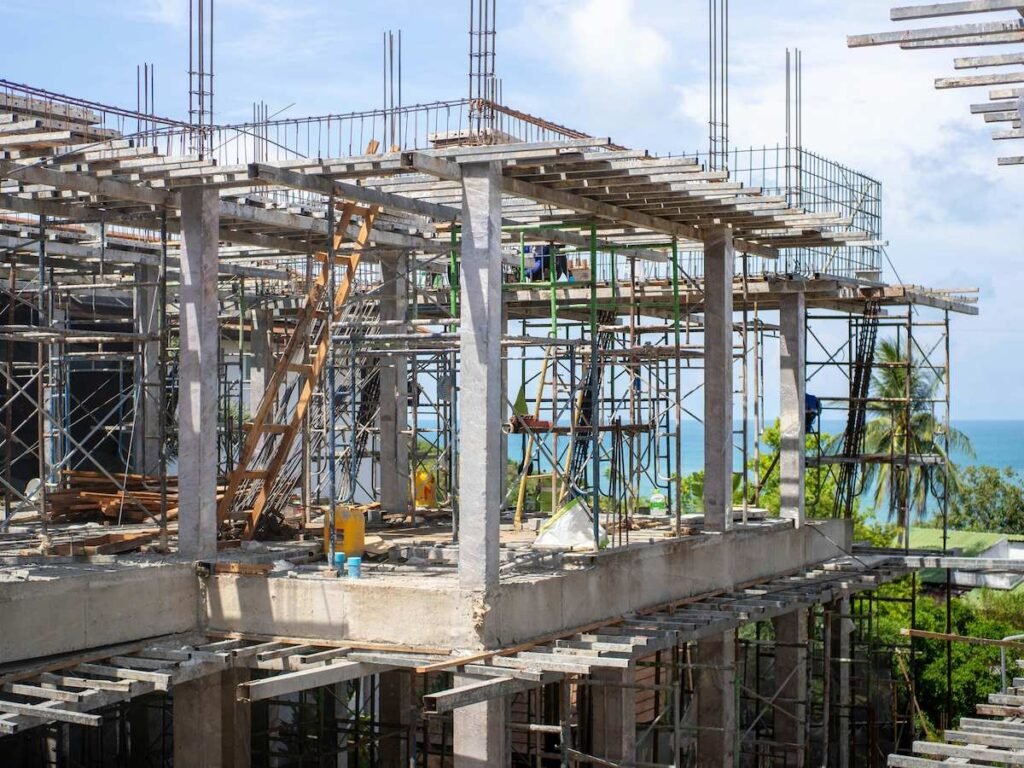
Coastal resilience is the first and most Kamala-specific response, handled professionally rather than dramatically. On the low coastal strip, a considered design raises finished floor levels appropriately, uses robust reinforced structure, keeps the ground level uncluttered where water could pass, orients and plans the building with awareness of the sea and of routes to higher ground, and treats the rising land behind as part of the site’s logic rather than just its view. Multi-storey reinforced concrete buildings performed markedly better than single-storey structures in the documented events, and elevated coastal roads protected what sat behind them, both of which are useful design lessons rather than reasons for alarm. A good architect treats this coast’s history as information that improves the design, which is precisely the kind of judgement an independent professional brings that a generic plan does not.
The west-coast orientation is the second. Kamala faces the afternoon and sunset sun, so deep overhangs, recessed and shaded openings, operable louvres, low-emissivity glazing, and roof forms that shade the western facade are standard, and the common brief of a glazed wall to the sunset needs the disciplined answer it does everywhere on this coast.
The steep hillside is the third. The slope behind Kamala calls for stepped and tiered forms that follow the gradient, minimal cut-and-fill within the permitted limits, retained drainage paths, and foundations engineered for the specific slope and soil, with heavy late-year rain and runoff making drainage a real engineering matter. A plot-specific soil and slope investigation is essential. The settled, family character of Kamala is the fourth driver: quality, restraint, and a building that fits a calm residential bay rather than imposing on it suit both the place and its market.
Lifestyle and who Kamala suits
Kamala offers a balanced coastal lifestyle: a calm beach, a real village with everyday amenities, quiet dining, a low-key evening scene, and easy access south to Patong’s services and north to the Surin and Bang Tao amenity, with the airport around thirty minutes away. It is family-oriented, settled, and unflashy. Its appeal is balance and value relative to the pricier neighbouring areas, and its considerations are the coastal resilience context and the slope of the desirable land.
For an architect’s client the choice is about priorities. Kamala suits a buyer building a family home, a long-term residence, or a steady rental who wants a calm, balanced coast at fair value and is willing to design coastal and hillside plots properly. It also offers estate and condominium options on the headland for buyers who want managed, structured ownership. It is a sensible rather than a speculative location, and its strength is precisely that a well-designed, well-sited home here is comfortable, durable, and good value. It rewards a measured buyer and a measured design.
A practical sequence for evaluating a Kamala plot
At Kamala the order of checks reflects both the regulatory and the resilience considerations.
Start by establishing the plot’s elevation and its position relative to the coast and to higher ground, and whether it sits within a master-planned estate, because these frame both the design approach and the rules. Then confirm the title, a Chanote verified at the Land Office, with boundary, access, and any estate documentation confirmed by a qualified lawyer, or the foreign-quota position if the route is condominium freehold. Then confirm the zoning classification and the permitted height, area, and use, the coastal setback if near the beach, and the access road status. Then, for any hillside plot, commission a slope and elevation survey before going further. Only once these are clear should you commission a soil and drainage investigation and a feasibility brief that, for a coastal plot, addresses resilience explicitly.
Most reputable architects on the island, including this practice, will conduct a preliminary land viability assessment before any design work begins. In Kamala this matters specifically because the right design response on a coastal plot here is informed by the area’s history, and that judgement belongs at the start of a project, before capital is committed, not after.
Final thoughts
Kamala is one of the more balanced and sensible places to build on Phuket’s west coast, and it is also a place whose history asks for a serious and informed approach to coastal building. The 2004 events are not a reason to avoid Kamala, which is a settled and desirable community today, but they are the clearest possible illustration of why the relationship between a building, the coast, and higher ground matters, and why a generic plan that ignores it is the wrong approach here above almost anywhere.
For a buyer who wants a calm, balanced, fairly valued coastal home, who designs coastal and hillside plots properly and takes the area’s resilience context seriously, Kamala is among the more rewarding choices on the island. For a buyer who treats it as a simple flat beach plot and ignores both the slope behind and the history of the coast, it is a place where that approach is least defensible. For the right brief, handled with the judgement the location deserves, it is excellent.
If you are weighing a plot in Kamala, the most useful first step is a site assessment that establishes elevation and the coastal relationship, any estate structure, title, zoning, and slope together, not separately, and that addresses coastal resilience explicitly for any plot near the shore. That assessment is offered as the first stage of every project this practice takes on.
Considering land in Kamala, Surin, Patong, Kathu, or elsewhere in Phuket? Get in touch for a preliminary land viability assessment. You can also visit our YouTube channel for videos about these areas, and find essential planning advice at www.thetropicalarchitect.com
Note on regulations: zoning, height, coastal setback, slope, estate, and title rules are subject to change and to local enforcement variations, and coastal siting on this part of the west coast carries resilience considerations that a responsible design should address directly. Always confirm current rules and the title, boundary, elevation, and position with the Phuket provincial Department of Public Works and Town and Country Planning office, the Land Office, and a licensed Phuket architect or legal advisor before relying on this guide for any acquisition or build decision.
Reading this alongside the rest of Phuket
If Kamala is on your shortlist, the neighbouring areas are worth reading alongside it, because the land rules and the character of a place change quickly across a few kilometres in Phuket. See the guides to Surin, Patong and Kathu.
Before any specific plot, the four briefings that apply island-wide are the the island-wide property overview, current villa build costs in Phuket, how foreigners can legally hold property here and buying land in Phuket as a foreigner. When you are ready to talk about a particular piece of land, see the Architect Phuket process.