An architect's guide to land viability, the branded-residence hillside, and what Phuket's most elite west-coast pocket asks of a design.
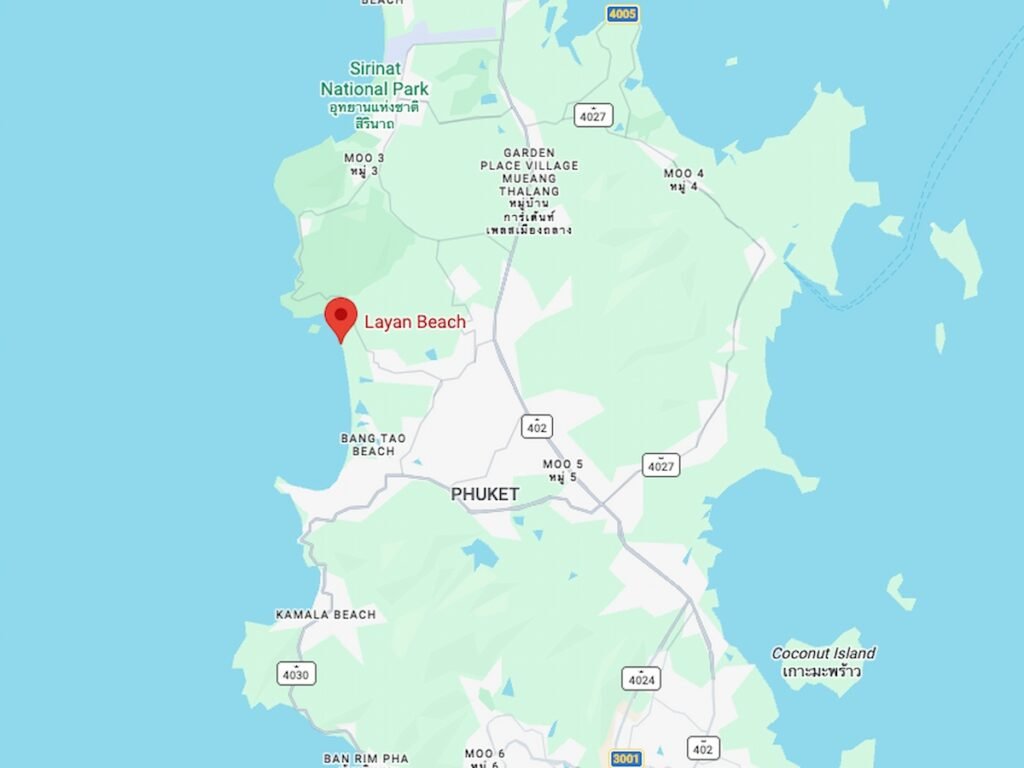
Layan is the small, elite, hillside pocket at the northern end of the Choeng Thale tambon, sitting between Bang Tao to the south and Sirinat National Park to the north. It is widely regarded as the most exclusive stretch of the west coast, and the reasons are specific. The defining feature is the Anantara Layan resort and the ultra-luxury branded residences clustered around it: Layan Residences by Anantara (a documented fifteen-villa hillside development), Avadina Hills by Anantara, and the newer Kiara Reserve Residences, all developed by Minor International, Anantara’s owner. To the south, the Banyan Tree group’s Angsana brand has built additional ocean-view residences on the adjacent Laguna land. Layan is a branded-residence and hillside-villa market, not a Bang Tao beach-strip extension, and it operates on different terms.
For someone considering building or investing here, Layan offers genuine, scarce ultra-premium positions: a small number of hillside plots with northern Andaman views toward Sirinat, branded hospitality service delivered to the villa, and a level of privacy that the wider Bang Tao area does not provide. It also brings two specific architectural constraints that have shaped what is built and continue to shape what can be built: a six-metre height cap in the coastal-controlled zone that has forced flat roofs and stepped living levels on the hillside, and the close proximity to Sirinat National Park on the northern edge. The honest story of Layan is that it is the strongest scarcity in the Choeng Thale tambon, with the most demanding architectural constraints and the most disciplined design language on the west coast.
This guide is written from an architect’s perspective. It assumes you are at the stage of asking whether Layan is right for your project, and what a sound building on land here might actually look like. One regulatory note at the outset: the December 2024 relaxation of the 80 to 140 metre elevation rule is relevant on the upper Layan hillside where the highest plots sit, but it converges with the coastal-control height cap on the lower slopes and with the Sirinat boundary at the northern edge, so the rules vary materially across what is a small area.
The land, what is actually there
Layan occupies the northern tip of the Choeng Thale tambon, with the short Layan Beach itself, the small Layan headland and lagoon, and a steep hillside rising behind, the whole area bounded to the north by the Sirinat National Park. The land divides clearly: the branded-residence land integrated with Anantara Layan, separately titled hillside villa plots, the beach-fronting strip with its height-controlled position, and the protected ground at the northern edge where the park begins.
This matters more here than in most areas, because at Layan the distinctions between branded land, hillside villa land, and protected land are tight, and a plot’s exact position in this small geography decides almost everything. The Anantara branded residences sit on a hillside immediately behind the resort, on documented elevated plots of around 2,500 square metres typical, with sea views over the bay and the park. Independent hillside villas occupy similar topography along the same slope. The coastal strip below carries the height cap. The northern edge meets Sirinat, with the protected-area, “dirty land” title risks the Mai Khao article covers in detail. The first question for any Layan plot is therefore exactly which of these categories it falls in, because the rules, the price, and the architectural latitude differ by a wide margin within walking distance.
The market is also smaller and more concentrated than Bang Tao. A handful of named developments and a small number of separately titled hillside plots make up much of what is available, and pricing reflects that scarcity rather than open-market dynamics.
Zoning, the coastal cap, and title
Phuket construction is governed primarily by the Building Control Act and the Town and City Planning Act, refined by Ministerial Regulations and environmental notifications. In Layan three frameworks combine and matter equally: the coastal-control height cap on the lower slopes, the slope and elevation rules on the upper hillside, and the protected-area rules at the northern Sirinat edge, with the estate or branded-residence covenants applying inside any managed development.
On the lower slopes within the coastal-controlled zone, a height cap in the order of six metres applies on the most sensitive land, with footprint and open-space limits in the near-shore strip and the absolute rule that beaches are public. This is the cap that produced the design language Layan is now known for: flat roofs, living spaces distributed across stepped levels following the slope, and outdoor space integrated with the indoor plan rather than stacked above it. A buyer purchasing on the lower slopes inherits that design language, because it is what the rules permit. On the upper slopes, the cap is less binding and the slope and elevation rules become decisive: a gradient at or above 35 degrees is treated as unbuildable, gentler slopes carry slope-protection, cut-and-fill, drainage, and engineering obligations, and the elevation framework applies on higher ground, with height measured from sea level so an elevated plot has progressively less buildable height the higher it sits.
At the northern edge, the Sirinat National Park boundary applies, with the protected-area and title risks covered fully in the Mai Khao guide. Any plot in northern Layan must have its position relative to the park boundary independently verified, with no exceptions. Where a plot sits within a branded residence such as Layan Residences by Anantara, Avadina Hills, or Kiara Reserve, the covenants, design controls, shared infrastructure, hospitality-integration agreements, and any leasehold or condominium ownership structures must be reviewed as part of the title itself, because they govern what can be built and operated.
Title diligence at Layan is the high-stakes version of the universal rule, layered with the branded-residence and leasehold realities. Proceed only on a Chanote, the full freehold title, verified at the Land Office with history, boundary, and access confirmed by a qualified lawyer specialising in luxury property structures, and review the leasehold terms, renewal mechanism, and underlying landowner with particular care given the recent Supreme Court rulings on 30 plus 30 plus 30 lease structures. The standard reference points for a Layan assessment are the Phuket City Land Use Planning Map for zoning, the coastal-control boundary on the lower slopes, the slope and elevation on the upper hillside, the Sirinat boundary at the northern edge, the branded-residence documentation if applicable, and a rigorous Land Office and legal check, all verified before any commitment.
What a good Layan design responds to
The design drivers at Layan are the six-metre coastal cap, the steep hillside, the west-coast orientation, and the branded-residence design language.
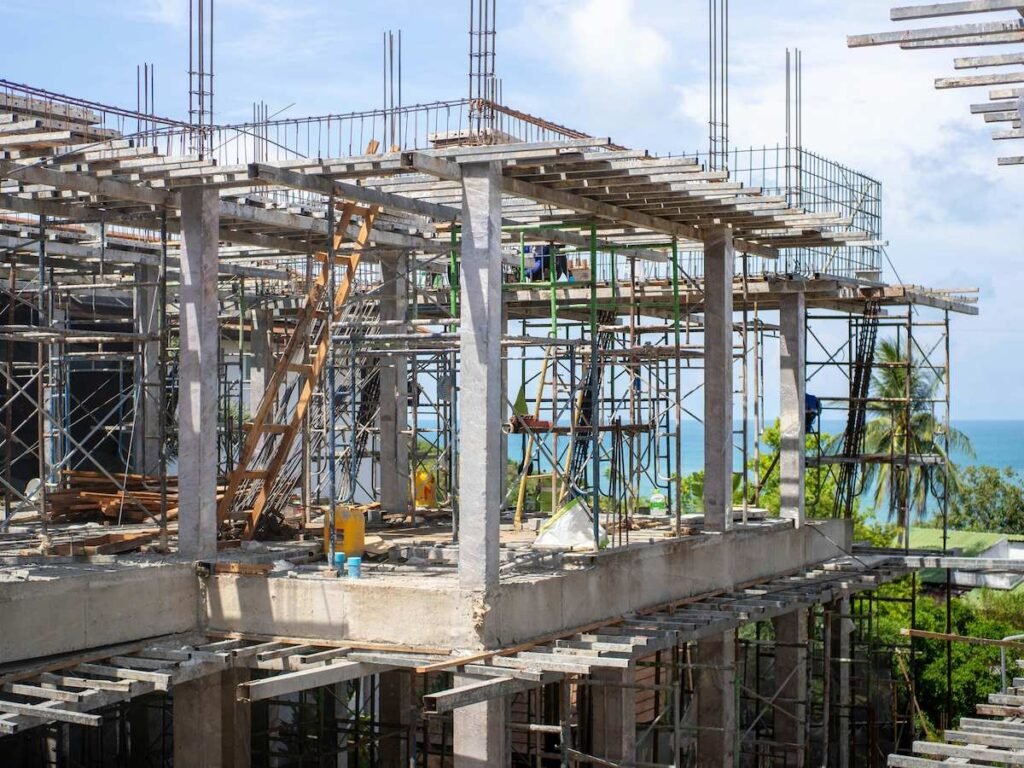
The coastal cap is the first response and it is genuinely Layan-defining. With six metres of permitted height on the controlled lower slopes, flat roofs are obligatory and living spaces have to be distributed across multiple stepped levels following the gradient, which is precisely what the established Layan villas demonstrate. Good design on a lower plot accepts the cap as a generator rather than a constraint, working with stepped pavilions, infinity-edge water against the slope, and outdoor rooms at every level. A design imported from a higher-cap context will not fit and will not be approved, which is why specialist local experience matters more here than in most areas.
The steep hillside is the second. Stepped and tiered forms following the gradient, minimal cut-and-fill within the permitted limits, retaining and drainage engineered for the specific slope and soil with genuine geotechnical input, and access resolved up steep estate and hillside lanes are the standard discipline. At Layan prices, none of this is optional, and the soil and slope investigation is a first-order design input.
The west-coast orientation is the third. Layan faces the afternoon and sunset sun and takes the full southwest monsoon, so deep overhangs, recessed and shaded openings, operable louvres, low-emissivity glazing, shading roof forms within the flat-roof discipline, and robust salt-air and weather detailing are essential. The branded-residence design language is the fourth driver. Inside a managed development, the design must satisfy the estate’s covenants and align with the hospitality-integration model, including provision for resort-style service delivery, rental-pool participation where relevant, and shared infrastructure. A project here is most efficient when the architect understands the estate language and the height-cap design grammar before the first sketch.
Lifestyle and who Layan suits
Layan offers a specific ultra-premium west-coast lifestyle: a quiet beach, the Anantara Layan resort and its branded services on the doorstep, hillside privacy with northern Andaman views and the Sirinat backdrop, and the Bang Tao, Laguna, and Cherngtalay amenities within minutes to the south, with the airport around twenty-five minutes via the eastern route. Top international schools and the Boat Avenue and Porto de Phuket retail and dining are also within reach. It is calm, exclusive, and resort-integrated rather than energetic or commercial, and it is one of the few west-coast areas that genuinely feels remote despite being close to everything.
For an architect’s client the choice is narrow. Layan suits a buyer at the upper-luxury level building a hillside primary residence, a managed branded-residence villa, or a discreet second home who wants scarcity, branded service, and proximity to the Bang Tao infrastructure without sitting in it, and who is prepared for the flat-roofed stepped-villa design language the rules require. The branded-residence leasehold and condominium routes are the practical structures for many buyers and need specialist legal review. It is rarely the right area for a buyer at any other price point or seeking conventional villa architecture, and never a place to economise on geotechnical or legal diligence given the values, the structures, and the constraints.
A practical sequence for evaluating a Layan plot
At Layan the order of checks is led by exact location within a small area and by the estate or branded-residence structure if applicable.
Start by establishing the plot’s precise category: lower slope inside the coastal cap, upper slope under the slope and elevation rules, branded-residence land inside a managed development, or northern land approaching Sirinat. Then confirm the title, a Chanote verified at the Land Office, with boundary and access confirmed by a qualified lawyer, the leasehold and branded-residence documentation reviewed in full where applicable, the foreign-quota position verified for any condominium freehold, and the Sirinat boundary independently checked for any northern plot. Then confirm the zoning classification and the permitted height, area, and use, and the access road status. Only once these are clear should you commission a plot-specific geotechnical and drainage investigation, decisive on the slope, and a feasibility brief shaped by the height cap and any estate covenants.
Most reputable architects on the island, including this practice, will conduct a preliminary land viability assessment before any design work begins. At Layan this is fundamental. The six-metre coastal cap, the steep hillside, the Sirinat boundary, and the branded-residence frameworks combine to make the buildable envelope, the design language, and the legal structure all interdependent, and that has to be understood before capital is committed.
Final thoughts
Layan is the smallest and most concentrated ultra-premium pocket on the west coast, and it is one where the design constraints have produced a recognisable, disciplined architectural language. The six-metre coastal cap that forced flat roofs and stepped levels, the slope discipline of the hillside, the Sirinat boundary at the northern edge, and the branded-residence frameworks together define a distinctive way of building, and a project that respects that language sits well in Layan, while one that fights it does not.
For a buyer who wants the most exclusive west-coast position, branded service, scarcity, and proximity to the wider Bang Tao infrastructure without its density, who designs within the height-cap language and the slope, and who matches the investment with specialist legal and geotechnical work, Layan is among the strongest addresses on Phuket. For a buyer chasing a conventional villa profile or a high-roofed contemporary statement, the rules do not bend, and the wrong design will not happen. For the right brief, handled with the discipline the location demands, it is exceptional.
If you are weighing a plot at Layan, the most useful first step is a site assessment that establishes the exact category of the land, the height-cap and slope position, any branded-residence or leasehold structure, the Sirinat boundary at the northern edge, title, zoning, and access together, not separately. That assessment is offered as the first stage of every project this practice takes on.
Considering land at Layan, Bang Tao, Choeng Thale, Mai Khao, or elsewhere in Phuket? Get in touch for a preliminary land viability assessment. You can also visit our YouTube channel for videos about these areas, and find essential planning advice at www.thetropicalarchitect.com
Note on regulations: zoning, height, coastal setback, slope, protected-area, estate, and title rules are subject to change and to local enforcement variations, and at Layan the interaction of the coastal height cap, the slope rules, the Sirinat boundary, and any branded-residence covenants in particular must be verified for any specific plot. Always confirm current rules and the title, position, slope, and structure with the Phuket provincial Department of Public Works and Town and Country Planning office, the Land Office, and a licensed Phuket architect and lawyer with experience of the west-coast luxury market before relying on this guide for any acquisition or build decision.