An architect's guide to land viability, contested title, and what Phuket's southern fishing coast asks of a design.
Rawai is one of the most characterful parts of Phuket, and it is also the part of the island where the question of who actually owns a piece of land is least straightforward. The southern coast around Rawai is the long-established home of the Urak Lawoi, the indigenous Chao Lay or sea people, a community of roughly two thousand who have lived and fished here for generations. It is also an area where land values have risen sharply, where developers hold title deeds over land the Urak Lawoi have occupied for far longer than those deeds have existed, and where that tension has produced a documented history of disputes, litigation, and in one case violence. For a buyer, this is not folklore or background colour. It is the single most important due-diligence reality in Rawai.
This guide is written from an architect’s perspective. It assumes you are at the stage of asking whether Rawai is right for your project, and what a sound building on land here might actually look like. One regulatory point is worth noting at the outset: the December 2024 relaxation of the 80 to 140 metre elevation rule is relevant on Rawai’s inland hills where sea-view plots sit, but it is secondary here to the title and land-status questions that define this area.
The land, what is actually there
Rawai occupies the southern tip of Phuket, a low coastal strip with a working pier and a fishing-village heritage, backed by hills that rise toward Nai Harn to the west and the Windmill and Promthep headlands. The flat coastal land holds the pier, the seafood restaurants, the Urak Lawoi village, and a growing expatriate residential fabric. The hills inland and toward the headlands carry the sea-view plots and the steeper constraints.
This matters for site selection more than the relaxed coastal atmosphere suggests, because at Rawai the central question for a great deal of the desirable coastal and near-village land is not its slope or its zoning but its title history. Parts of the Rawai coast are the subject of long-running disputes between the Urak Lawoi community and parties holding formal title deeds. Thai courts have ruled in both directions: some sea gypsy families have been evicted on the strength of title deeds, and in other cases courts have found for the community after archaeological, forensic, and historical evidence showed settlement predating the issuance of those deeds. The practical consequence for a buyer is that some land at Rawai carries a contested or sensitive history that a normal title check alone may not surface, and that the ethical and reputational dimension of building on such land is real, not theoretical.
Away from the contested coastal pockets, much of Rawai is ordinary, well-titled land where the considerations are the usual ones, the flat coastal strip, the steep inland hills, and the southern-tip exposure. The first task for any Rawai plot is therefore to establish clearly which kind of land it is.
Zoning, contested land, and title
Phuket construction is governed primarily by the Building Control Act and the Town and City Planning Act, refined by Ministerial Regulations and environmental notifications. In Rawai the decisive factor for a significant amount of land is title history and land status, with the ordinary zoning, slope, and coastal rules applying on top.
Title diligence at Rawai is the highest-priority version of the universal rule, and it must go further here than the standard check. Proceed only on a Chanote, the full freehold title, verified at the Land Office, but additionally require a qualified, independent Thai lawyer to investigate the plot’s history specifically for any indigenous-community claim, prior occupation, disputed-title litigation, or sensitive provenance, particularly for any plot on or near the coastal village land. A title deed that appears clean on its face does not, by itself, resolve the kind of historically contested situation documented at Rawai, and the buyer who relies on the deed alone is exposed to both legal and reputational risk. This is precisely the situation where an independent professional and a specialist lawyer earn their place, and where informal assurances from a seller or agent are insufficient.
On the ordinary, uncontested land, the rules are the familiar ones. On the beach and coastal side, the coastal setback applies, with no building directly on the shore, a setback from the high-tide line typically reflected in the title boundary, and height and footprint limits in the sensitive near-shore strip, and the rule that beaches are public is absolute. On the inland and hillside land, the zoning is predominantly residential, with the general inland height position rather than coastal caps, the precise permitted height, area, and use depending on the specific zone, and the access road width and status governing setback and height on Rawai’s narrow inland lanes. The slope rules are decisive on the hills, with a gradient at or above 35 degrees treated as unbuildable and gentler slopes carrying slope-protection, cut-and-fill, drainage, and engineering obligations, and the elevation framework applying on higher ground. The standard reference points for a Rawai assessment are the Phuket City Land Use Planning Map for zoning, the title and land-status history with specific attention to any contested or indigenous-claim provenance, the slope and elevation on any hillside plot, the coastal setback against the title boundary, and a rigorous independent Land Office and legal check, all verified before any commitment.
What a good Rawai design responds to
The design drivers at Rawai are the steep inland hills, the southern-tip orientation and resilience, and a context that calls for restraint.
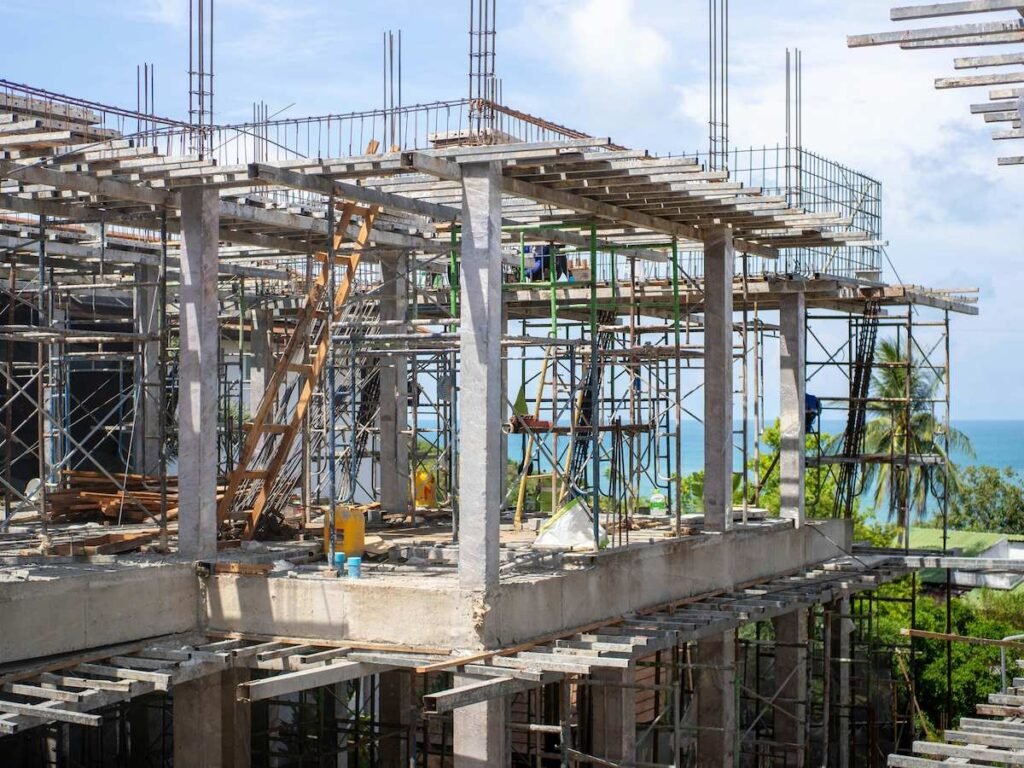
The inland hills are the first response for the many Rawai projects that are hillside sea-view villas. A good design follows the gradient with stepped and tiered forms, keeps cut-and-fill within the permitted limits, engineers retaining and drainage for the specific slope and soil with genuine geotechnical input, and resolves access up the narrow inland lanes as part of the design rather than as an afterthought. The hillside villas that work at Rawai are those designed around the contour and the view together; the ones that fail fought the slope.
The southern-tip orientation and resilience is the second, handled professionally. Rawai and the wider southern tip were affected in the 2004 tsunami, and the small beaches around the southern point were among the more heavily affected on the island, so on any low coastal plot raised finished floor levels, robust reinforced structure, and an awareness of the route to higher ground are responsible, informed inclusions rather than alarmist ones. Rawai also faces significant seasonal weather and is calmer for swimming than it is dramatic for sea views, so coastal durability detailing for salt air and weather matters. Deep overhangs, shaded and recessed openings, operable louvres, low-emissivity glazing, and cross-ventilation designed deliberately reduce the cooling load and the running costs over the building’s life.
The context calls for restraint as the third driver. Rawai’s character is a working fishing coast with a settled indigenous community and a growing residential expatriate population, not a resort strip. A building that sits quietly and respectfully in that setting, modest where it adjoins the village fabric and considered in how it relates to its neighbours, suits the place; one that imposes on it does not. A plot-specific soil and drainage investigation is essential on both the flat and the hillside.
Lifestyle and who Rawai suits
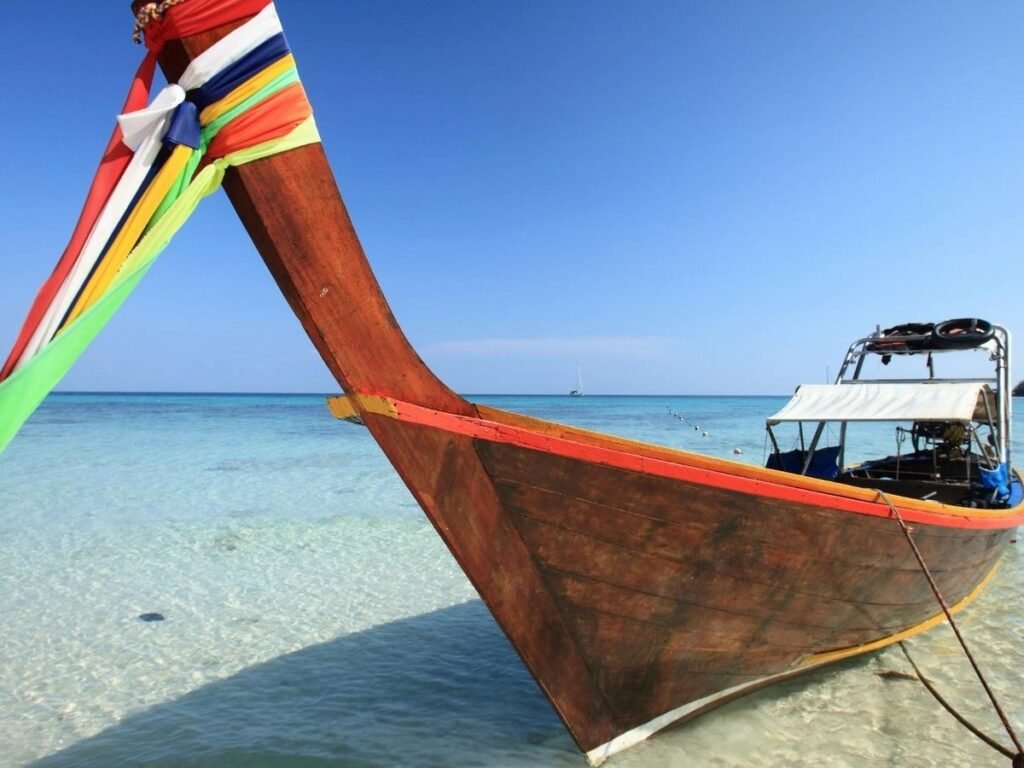
Rawai offers a distinctive southern-tip lifestyle: a working pier and longtail and speedboat departures to the nearby islands, a renowned local seafood scene, a genuine fishing-village character, a settled and growing expatriate community, and easy access to Nai Harn, Chalong, and the southern attractions, with the airport toward the north of the island. It is relaxed, residential, and authentic rather than polished or touristic. Its appeal is character, value relative to the west-coast premium areas, and a connected but unhurried setting, and its central consideration is the land-status complexity on parts of the coast.
For an architect’s client the choice is about priorities and, above all, about land verification. Rawai suits a buyer building a primary residence, a long-term home, or a characterful rental who values authenticity and value over polish, who is comfortable with a working-community rather than a resort setting, and who, critically, undertakes the deeper title and provenance diligence the area requires. It is rarely a high-yield mass-tourism play, and it is never an area in which to proceed on a coastal or near-village plot without establishing the land’s history with particular care. For a buyer who does that properly, Rawai is one of the more genuine and rewarding places on the island.
A practical sequence for evaluating a Rawai plot
At Rawai the order of checks is led by the title and land-status question, because that is the issue most specific to this area and most likely to carry both legal and ethical weight.
Start, before any commitment, by establishing the plot’s title and land-status history in depth: a Chanote verified at the Land Office, and an independent qualified lawyer instructed specifically to investigate any indigenous-community claim, prior occupation, disputed-title litigation, or sensitive provenance, especially for any plot on or near the coastal village land. Treat this as the decisive stage on which the purchase stands or falls. Only if the land is confirmed genuinely clean and uncontested should you proceed to the slope and elevation survey for hillside land, the zoning classification, the coastal setback if near the beach, and the access road status, and only then a soil and drainage investigation and a feasibility brief.
Most reputable architects on the island, including this practice, will conduct a preliminary land viability assessment before any design work begins. At Rawai this is not a formality. The documented history of contested land here means a plot can present a clean-looking deed and still carry a complicated and sensitive past, and the assessment that establishes what a plot truly is, legally and ethically, must come before capital is committed, without exception.
Final thoughts
Rawai is one of the most characterful and genuine parts of Phuket, and it is also the area where the question of what a piece of land actually is, who has a claim to it, and what history it carries, matters more than anywhere else on the island. The fishing-village heritage that gives Rawai its appeal is a living community with a documented and sometimes contested relationship to the land, and a responsible buyer treats that as a central due-diligence and ethical reality rather than a picturesque detail.
For a buyer who wants authenticity, value, and a connected southern-tip setting, who builds appropriately on genuinely verified land, and who undertakes the deeper title and provenance diligence the area demands, Rawai is among the more rewarding and honest places to build on Phuket. For a buyer who relies on a deed at face value and moves quickly on a coastal or near-village plot, it is one of the places where that approach is most likely to go wrong, legally and reputationally. For the right brief, handled with the care the location requires, it is excellent.
If you are weighing a plot in Rawai, the most useful and most necessary first step is a site assessment that establishes the land’s title and provenance history first, then slope, zoning, and the coastal relationship together, not separately. That assessment is offered as the first stage of every project this practice takes on.
Considering land in Rawai, Nai Harn, Chalong, or elsewhere in Phuket? Get in touch for a preliminary land viability assessment. You can also visit our YouTube channel for videos about these areas, and find essential planning advice at www.thetropicalarchitect.com
Note on regulations: zoning, height, coastal setback, slope, land-status, and title rules are subject to change and to local enforcement variations, and at Rawai the history and provenance of land on and near the coastal village in particular are matters to verify with exceptional care for any specific plot. Always confirm current rules and the title, land status, slope, and position with the Phuket provincial Department of Public Works and Town and Country Planning office, the Land Office, and a licensed Phuket lawyer with specific knowledge of the area before relying on this guide for any acquisition or build decision.
Reading this alongside the rest of Phuket
If Rawai is on your shortlist, the neighbouring areas are worth reading alongside it, because the land rules and the character of a place change quickly across a few kilometres in Phuket. See the guides to Nai Harn and Chalong.
Before any specific plot, the four briefings that apply island-wide are the our Phuket market overview, a realistic build-cost breakdown, foreign ownership structures in Phuket and what land due diligence looks like here. When you are ready to talk about a particular piece of land, talk to Nay about the plot.