An architect's guide to land viability, the protected beach, and what Phuket's most strictly enforced shoreline asks of a design.
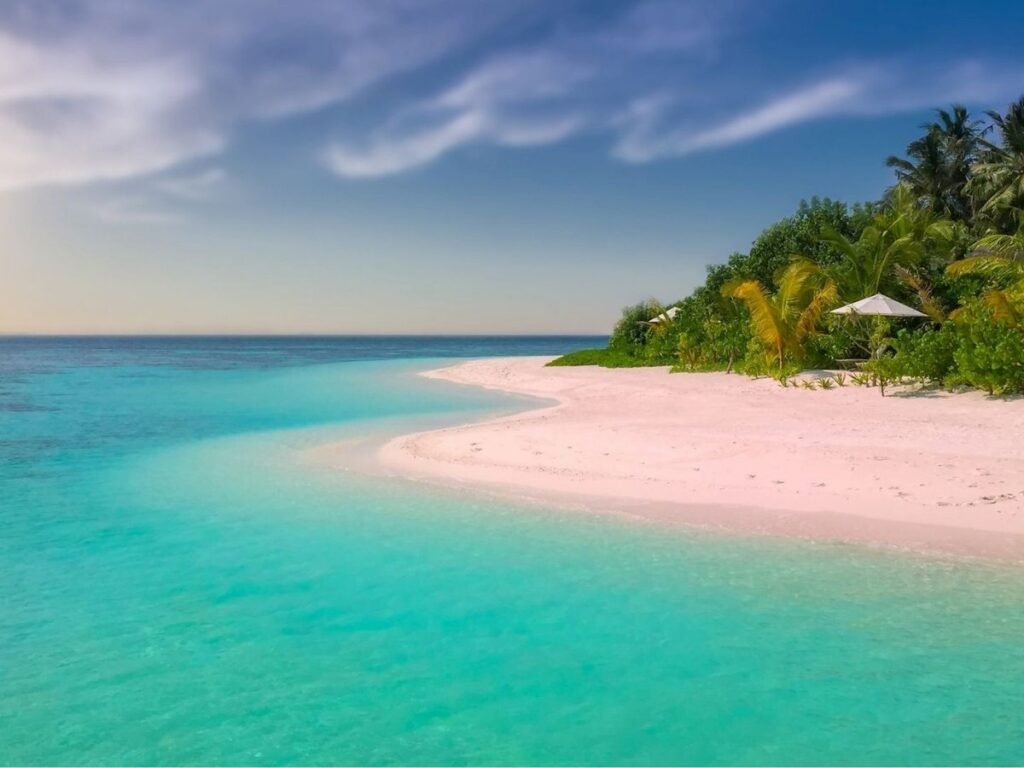
Surin tells the most cautionary tale in Phuket property. It is a genuinely elegant west-coast beach, long favoured by the island’s most discerning visitors, with golden sand, clear water, and a refined reputation. It is also the single most prominent beach-encroachment enforcement case in the island’s modern history. In 2016 the Thai authorities demolished dozens of illegal beachfront structures at Surin, including some of the most famous beach clubs in Thailand, because they sat on public land. Surin was then designated a protected Beach of Honour, a special category created for it alone because the King and Queen visited its sands in 1959, managed to the same strict standard as a virgin beach. Enforcement has continued since, with further demolitions of illegal beachfront businesses and seizure of encroached land as recently as May 2025.
For someone considering building here, this history is the most important thing to understand, more important than the elegance, the prestige, or the views. Surin is the place on Phuket where the rules about public beach land, setbacks, and encroachment are enforced most visibly and most repeatedly. The honest story of Surin is that it is a superb place to build correctly and the worst place on the island to build incorrectly, because here the enforcement is not theoretical, it is documented, recent, and ongoing.
This guide is written from an architect’s perspective. It assumes you are at the stage of asking whether Surin is right for your project, and what a sensible building on land here might look like.
An important update for Surin landowners
The defining facts about Surin are the protected status of the beach and the active, repeated enforcement against encroachment.
The points worth knowing for Surin specifically:
Surin Beach is a designated protected Beach of Honour, a unique special category managed to virgin-beach standard, with no commercial structures, vendors, or beach furniture permitted on the beach itself
In 2016 the authorities demolished dozens of illegal beachfront structures here, including world-known beach clubs, on the basis that they occupied public land, and the enforcement has continued with further demolitions and land seizures into 2025
The coastal setback and the rule that beaches are public are not just legal positions here, they are actively and visibly enforced, which makes accurate setback and title verification more critical at Surin than almost anywhere else
The desirable land is the steeply rising hillside behind the narrow coastal strip, which brings slope and elevation constraints precisely where buyers want sea views
The headline December 2024 elevation relaxation is relevant on the inland rises but secondary to the central fact: at Surin the line between legal private land and protected public beach land is the line that has repeatedly been enforced with backhoes.
The land, what is actually there
Surin sits on the west coast between Bang Tao to the north and Kamala to the south, with a short, narrow flat strip immediately behind the beach and hills that rise quickly and steeply inland. The buildable geography is tight: the flat coastal strip is limited and now strictly controlled, and the land that offers the prestigious sea views is the rising hillside, which is exactly the land that carries slope, elevation, and access constraints.
This matters for site selection more than the area’s polished image suggests, because at Surin the constrained land and the desirable land are largely the same land. The narrow coastal strip is where encroachment enforcement has concentrated and where the setback is most strictly policed. The hillside behind is steep, with the gradient, cut-and-fill, drainage, and elevation issues that any aggressive Phuket slope carries, and the sea views that justify Surin prices come precisely from building up that slope. The first questions for any Surin plot are its exact relationship to the public-beach boundary and the setback, and its slope and elevation if it is on the hillside, not its broad position in a prestigious area.
The character of the place reinforces this. Surin’s value rests on its protected, uncluttered beach and its exclusivity. That protection is an amenity for a correctly built home set back and up from the beach, and an existential risk for anything that strays toward the public land the authorities have repeatedly reclaimed.
Zoning, the protected beach, and title
Phuket construction is governed primarily by the Building Control Act and the Town and City Planning Act, refined by Ministerial Regulations and environmental notifications, but at Surin the coastal setback and public-land rules are the framework that matters most, because they are the rules that have actually been enforced here within recent memory.
On the beach and coastal side, the position is unusually strict. Surin Beach is managed to virgin-beach standard with no permitted commercial structures on the beach itself, the rule that beaches are public is absolute and has been enforced by demolition, and the setback from the high-tide line is policed rather than assumed. A plot near the beach must have its boundary established precisely against the public-land line, because at Surin the consequence of getting that line wrong is not a theoretical risk but a demonstrated outcome. Any presentation that implies private beach, beach frontage rights, or structures close to the sand should be treated as a serious warning rather than a selling point.
On the inland and hillside land, the zoning is predominantly residential, permissive for the high-value villa typical here, with the general inland height position rather than the coastal caps, the precise permitted height, area, and use depending on the specific zone, and the access road width and status governing setback and height. The slope rules are decisive on the hillside, with a gradient at or above 35 degrees treated as unbuildable and gentler slopes carrying slope-protection, cut-and-fill, drainage, and engineering obligations, and the elevation framework applying on higher ground. A view plot on the Surin hillside must be slope and elevation verified before purchase, because the steepness that delivers the view is also what triggers the constraints.
Title diligence at Surin is the high-stakes version of the universal rule, with a specific local emphasis. Beyond confirming a Chanote, the full freehold title, verified at the Land Office with history, boundary, and access confirmed by a qualified lawyer, the verification here must establish the plot’s precise relationship to the public-beach and protected-land boundaries, given the documented history of structures being removed for crossing exactly that line. The standard reference points for a Surin assessment are the Phuket City Land Use Planning Map for zoning, the public-beach and setback boundary established precisely against the title, the slope and elevation on any hillside plot, and a rigorous Land Office title check, all verified with the provincial Department of Public Works and Town and Country Planning office, the relevant district authority, and a qualified lawyer before any commitment.
What a good Surin design responds to
The design drivers at Surin are the strict setback discipline, the steep west-facing hillside, and the premium context.
The setback discipline is the first response and it is non-negotiable here. A good Surin design sits unambiguously within the legal private boundary, set back from the public-beach line with margin rather than precision, because the enforcement history shows that proximity to that line is a risk that is not worth engineering against. The design ambition at Surin is realised by building up the protected hillside with framed sea views, not by pushing toward the beach, and a competent architect treats the public-land boundary as a hard line to stay well clear of rather than a limit to build up to.
The steep west-facing hillside is the second. Surin’s slope is aggressive, and a good design works with it through stepped and tiered forms that follow the gradient, minimal cut-and-fill within the permitted limits, retained natural drainage, and foundations engineered for the specific slope and soil. The west orientation means the afternoon and sunset sun is intense, so deep overhangs, recessed and shaded openings, operable louvres, low-emissivity glazing, and roof forms that shade the western facade are essential, and the near-universal brief of a glazed wall to the sunset is exactly the brief that demands the most disciplined answer on a steep west-facing plot.
The premium context is the third. At Surin price points the build quality, the material specification for the exposed coastal salt-air environment, and the integration of pool, landscape, and indoor-outdoor living must match the land value and the area’s exacting expectations. Drainage on the steep hillside is a genuine engineering matter given heavy late-year rain and runoff, and a plot-specific soil and slope investigation is essential rather than optional. The most useful thing an architect can establish at Surin, before any design begins, is exactly where the legal boundaries sit and exactly what the slope permits, because both have hard consequences here.
Lifestyle and who Surin suits
Surin offers one of the most refined lifestyles on the island: a protected, uncluttered beach, an upscale and understated atmosphere, quality dining, and proximity to the Bang Tao and Cherngtalay amenity to the north, with the airport around twenty-five minutes away. It is deliberately quiet, exclusive, and low-key rather than lively. Its appeal is prestige and a protected natural setting, and its trade is high cost, scarce and tightly controlled coastal land, and the strictest enforcement environment on the island.
For an architect’s client the choice is about priorities and discipline. Surin suits a buyer building a high-value primary residence or a refined retreat who wants prestige and a protected beach and who accepts that the price of that setting is the most rigorous boundary and slope diligence on Phuket. It rewards a buyer who builds correctly, set back and up, with quality and restraint. It punishes, visibly and expensively, anyone who treats the beach proximity as an asset to maximise. It is rarely the right area for a budget build, and never a place to economise on legal boundary verification given the documented enforcement.
A practical sequence for evaluating a Surin plot
At Surin the order of checks is led by the boundary question, because that is the question the enforcement history has answered in the most uncompromising way.
Start by establishing the plot’s precise relationship to the public-beach and protected-land boundary and the coastal setback, before any commitment, because at Surin this is the determining risk. Then confirm the title, a Chanote verified at the Land Office, with boundary and access confirmed by a qualified lawyer. Then confirm the zoning classification and the permitted height, area, and use, and the access road status. Then, for any hillside plot, commission a slope and elevation survey before going further. Only once these are clear should you commission a soil and drainage investigation and a feasibility brief.
Most reputable architects on the island, including this practice, will conduct a preliminary land viability assessment before any design work begins. At Surin this is not a formality. The beach here has been cleared of illegal structures more than once within recent years, and the assessment that establishes exactly where a plot stands relative to protected and public land is the difference between a secure home and a demonstrated, repeated, public outcome.
Final thoughts
Surin is one of the most desirable addresses on Phuket and one of the least forgiving. The same protected, uncluttered beauty that makes it prestigious is the protection that has been enforced with demolitions in 2016 and again as recently as 2025. The elegance is real, but it is inseparable from the strictest enforcement environment on the island, and a buyer who understands that builds somewhere superb, while a buyer who ignores it risks the most public kind of loss.
For a buyer who wants prestige and a protected coastal setting, who builds set back and up the hillside with quality and restraint, and who treats the boundary and slope verification as the decisive first step, Surin is among the finest places to build on Phuket. For a buyer who is drawn by the beach and inclined to maximise proximity to it, it is the place where that instinct has repeatedly and visibly failed. For the right brief, handled with the discipline the location demands, it is exceptional.
If you are weighing a plot in Surin, the most useful and most necessary first step is a site assessment that establishes the public-beach and protected-land boundary and the setback first, then title, zoning, and slope together, not separately. That assessment is offered as the first stage of every project this practice takes on.
Considering land in Surin, Bang Tao, Kamala, Cherngtalay, or elsewhere in Phuket? Get in touch for a preliminary land viability assessment. You can also visit our YouTube channel for videos about these areas, and find essential planning advice at www.thetropicalarchitect.com
Note on regulations: zoning, height, coastal setback, protected-beach, slope, and title rules are subject to change and to local enforcement variations, and at Surin specifically the public-beach boundary and the protected-beach status have been the subject of repeated and recent enforcement, making precise verification essential for any plot near the coast. Always confirm current rules and the title, boundary, and slope position with the Phuket provincial Department of Public Works and Town and Country Planning office, the relevant district authority, the Land Office, and a licensed Phuket architect or legal advisor before relying on this guide for any acquisition or build decision.
Reading this alongside the rest of Phuket
If Surin is on your shortlist, the neighbouring areas are worth reading alongside it, because the land rules and the character of a place change quickly across a few kilometres in Phuket. See the guides to Bang Tao, Kamala and Choeng Thale.
Before any specific plot, the four briefings that apply island-wide are the our Phuket market overview, a realistic build-cost breakdown, foreign ownership structures in Phuket and what land due diligence looks like here. When you are ready to talk about a particular piece of land, talk to Nay about the plot.